Objective
Sherlock Scenario
The scenario places the analyst in an ICS-focused security team and asks for research into Sandworm Team, also known as BlackEnergy Group and APT44. The goal is to use MITRE ATT&CK to identify and map adversary behavior, techniques, malware, and infrastructure associated with the group.
This investigation focuses primarily on Sandworm activity tied to the 2016 Ukrainian electric power grid campaign, a 2022 campaign targeting Ukrainian infrastructure, and other tools historically associated with the group.
Sandworm Attribution and Campaign Research
Task 1: When did Sandworm Team begin operations?
I opened the MITRE ATT&CK page for Sandworm Team and reviewed the group summary. The page identifies when the group was first known to have begun operating.
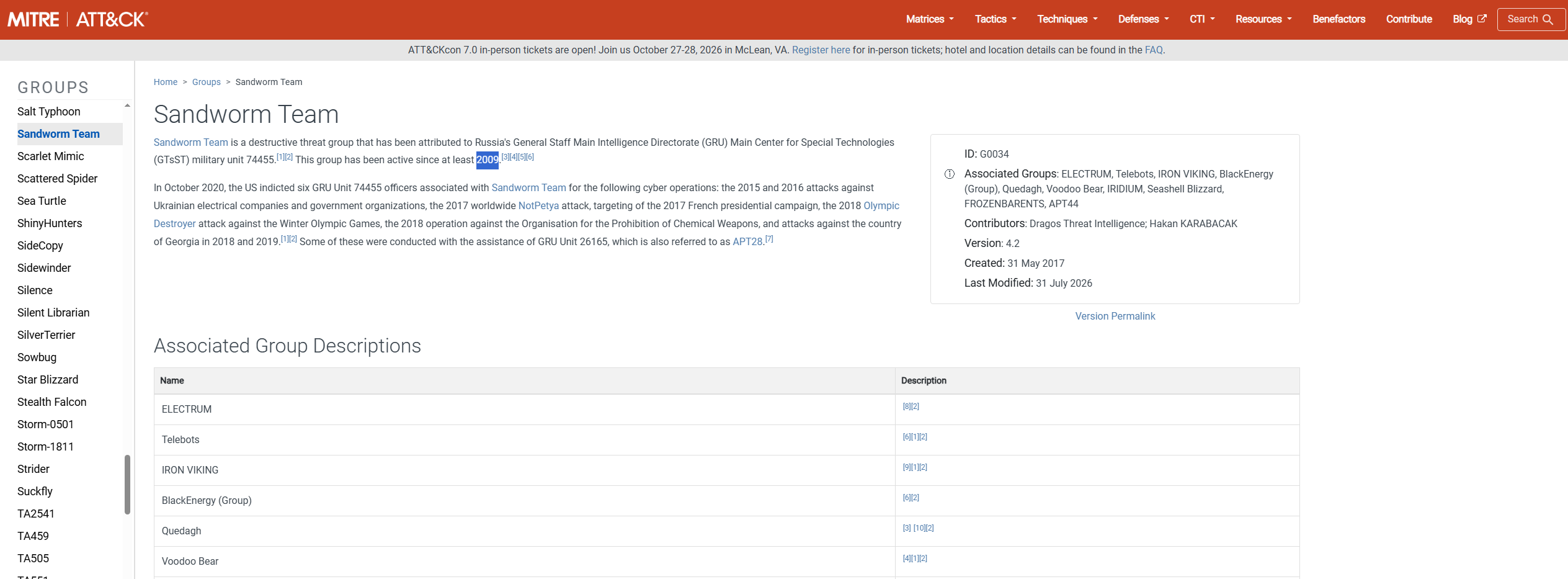
Answer:
2009Task 2: What additional Credential Access technique was used during the 2016 campaign?
I opened the MITRE ATT&CK campaign page for the 2016 Ukraine Electric Power Attack (C0025) and reviewed the techniques associated with the campaign.
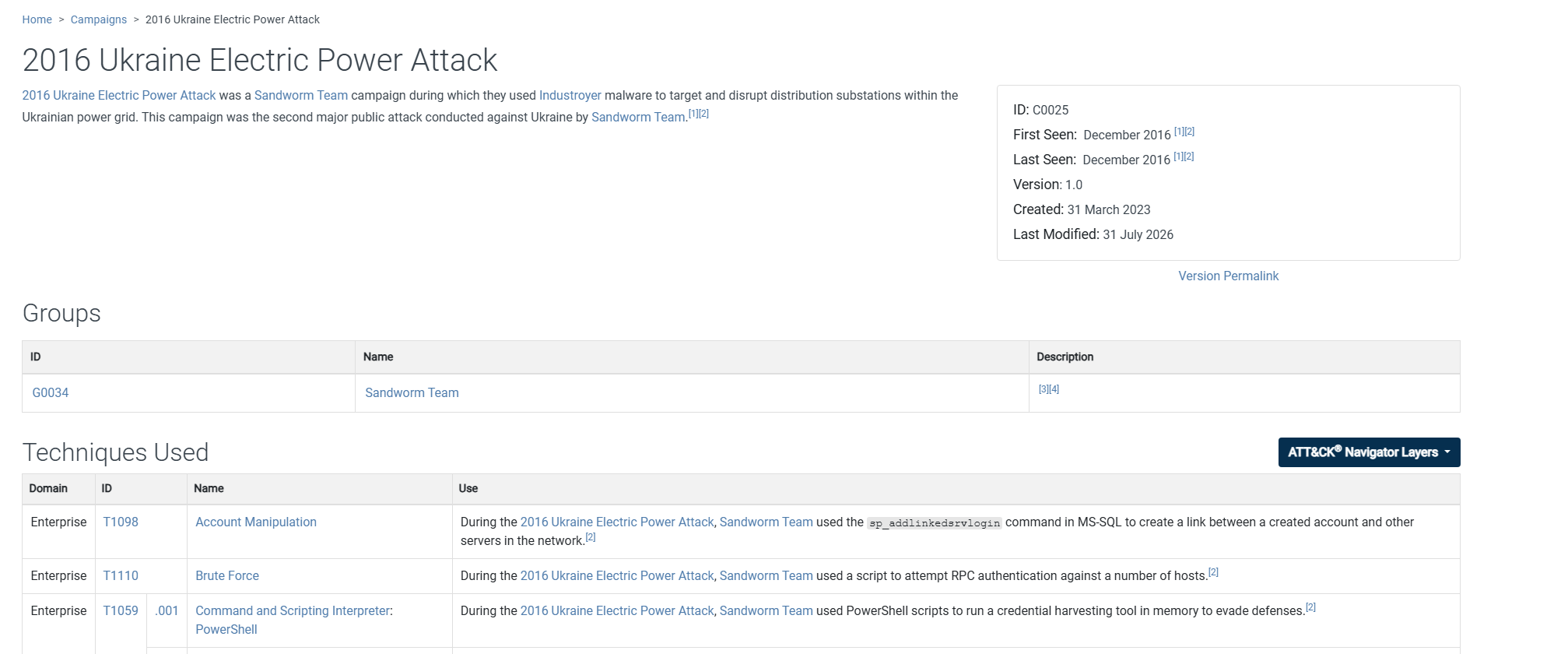
Using MITRE ATT&CK Navigator, I filtered the campaign techniques to the Credential Access tactic. Alongside LSASS Memory (T1003.001), the other listed technique was Brute Force.
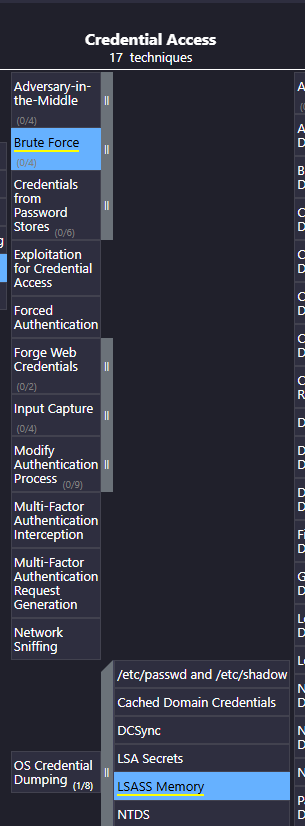
Answer:
T1110 — Brute ForceTask 3: What VBS script was used during the 2016 campaign?
I returned to the campaign page and searched the technique descriptions for references to .vbs files. The campaign documentation identified the script by name.
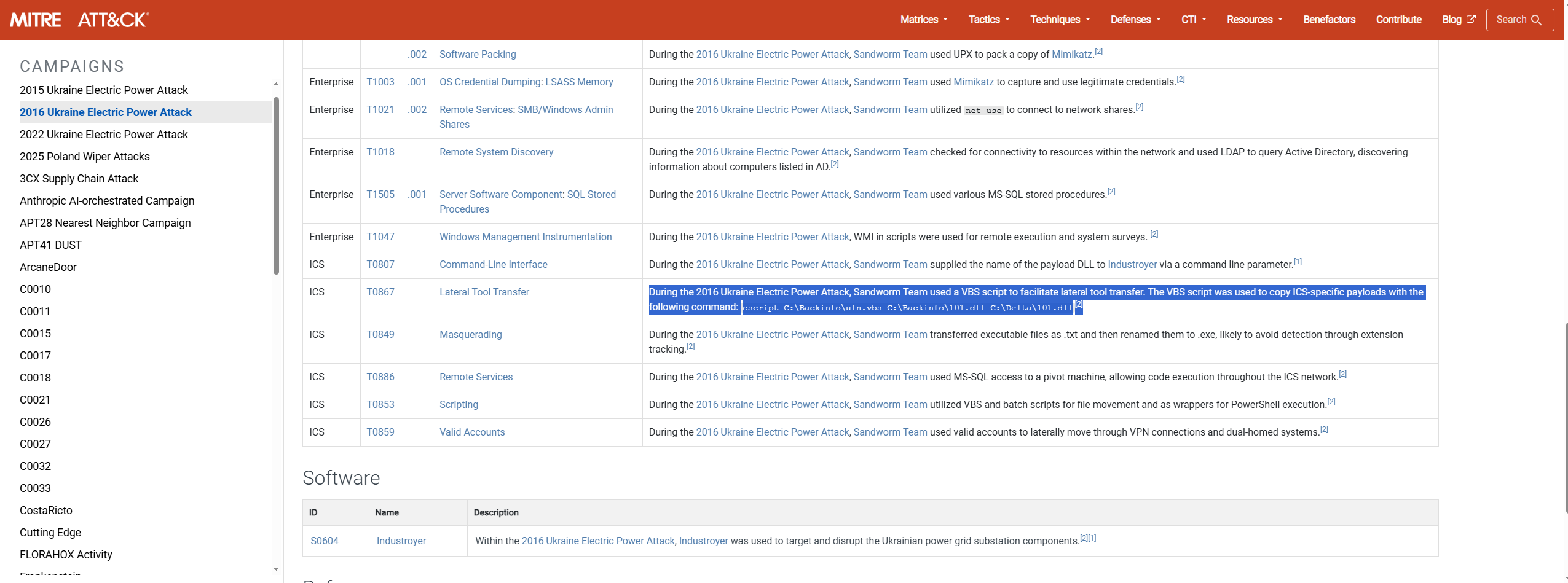
Answer:
ufn.vbs2022 Campaign and ICS Activity
Task 4: What persistence technique was used to maintain remote access?
I returned to the Sandworm group page and located the relevant 2022 campaign.
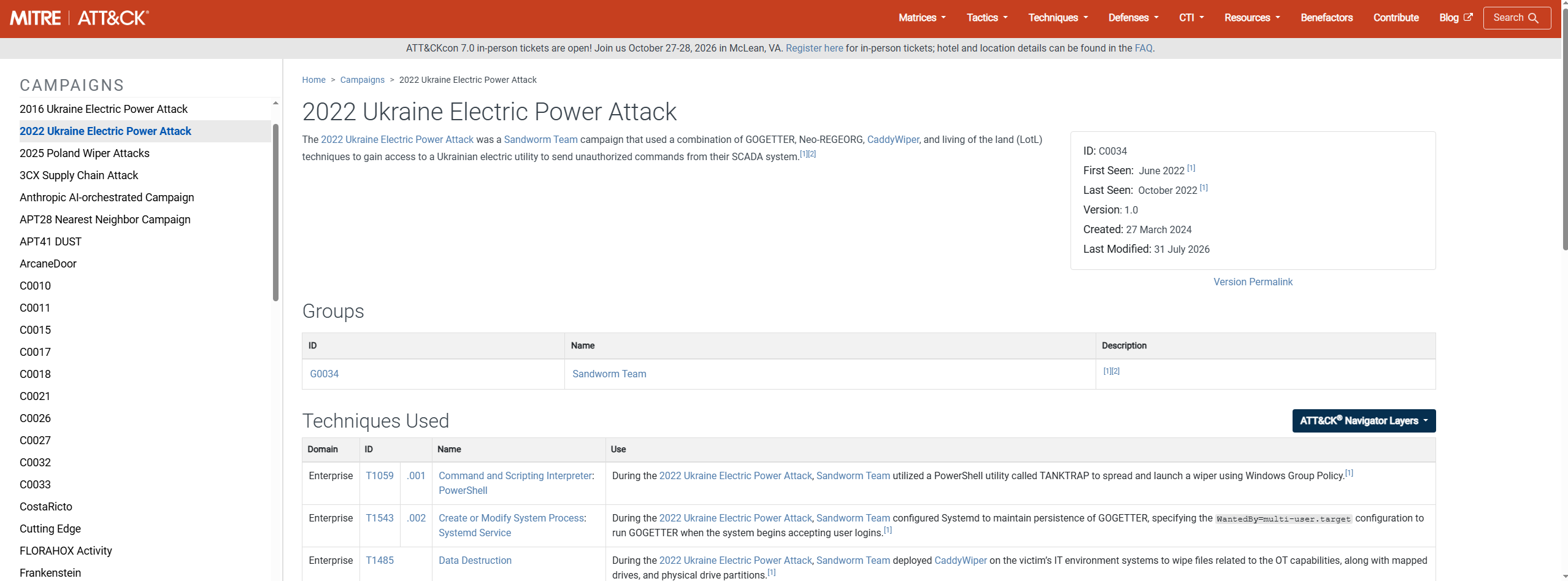
I then opened the campaign in ATT&CK Navigator and reviewed the techniques under the Persistence tactic.
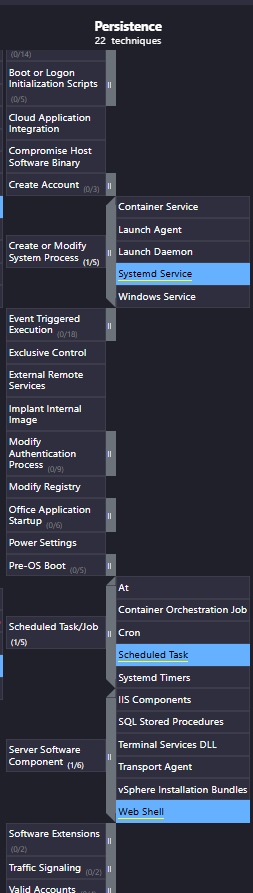
Because several persistence techniques were listed, I returned to the campaign page and reviewed the descriptions for each technique. The technique describing a server-side component used for continued remote access was Server Software Component: Web Shell.

Answer:
T1505.003 — Web ShellTask 5: What tool was used for the web-shell persistence?
The technique description identified the web shell used by the group.
Answer:
Neo-REGEORGTask 6: Which SCADA application binary was abused for code execution?
I searched the campaign documentation for references to SCADA. Multiple technique descriptions referenced the same binary being used to execute commands in the SCADA environment.

Answer:
scilc.exeTask 7: What command line was used against substations?
The command line was included in the ATT&CK description documenting how scilc.exe was used.
Answer:
C:\sc\prog\exec\scilc.exe -do pack\scil\s1.txtTask 8: What malware was used for data destruction?
I reviewed the ATT&CK entry for the Data Destruction technique associated with the campaign. The description identified the destructive malware used.

Answer:
CaddyWiperTask 9: What Execution technique could CaddyWiper perform?
I opened the MITRE ATT&CK software page for CaddyWiper and reviewed its associated techniques. The relevant technique under Execution was Native API.
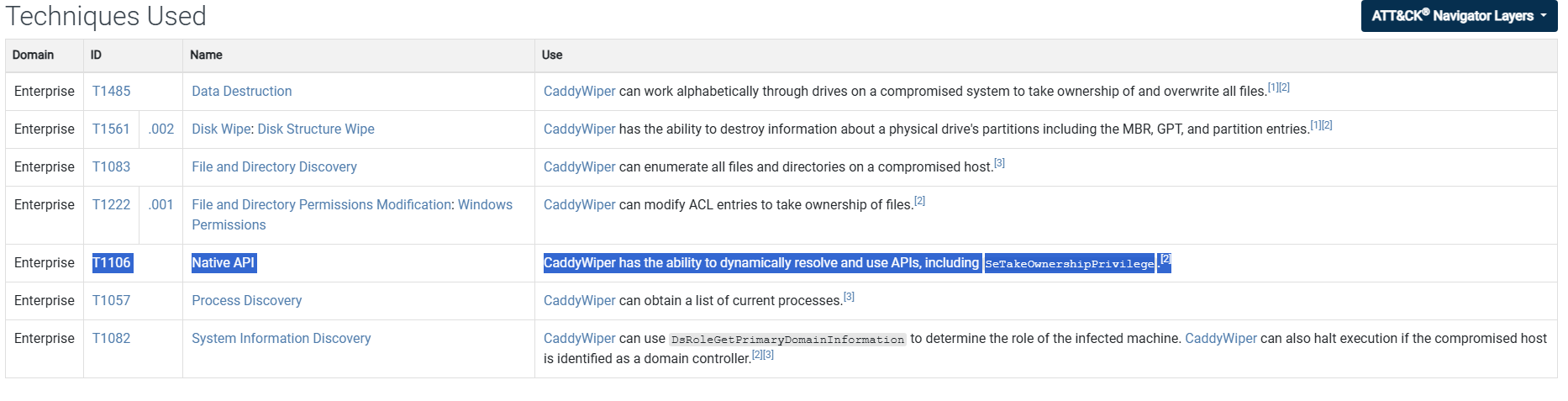
Answer:
T1106 — Native APIAssociated Malware and Infrastructure
Task 10: What auto-spreading ransomware-like malware is associated with Sandworm?
I reviewed the software associated with Sandworm and identified the malware matching the description of an auto-spreading ransomware with worm-like behavior.
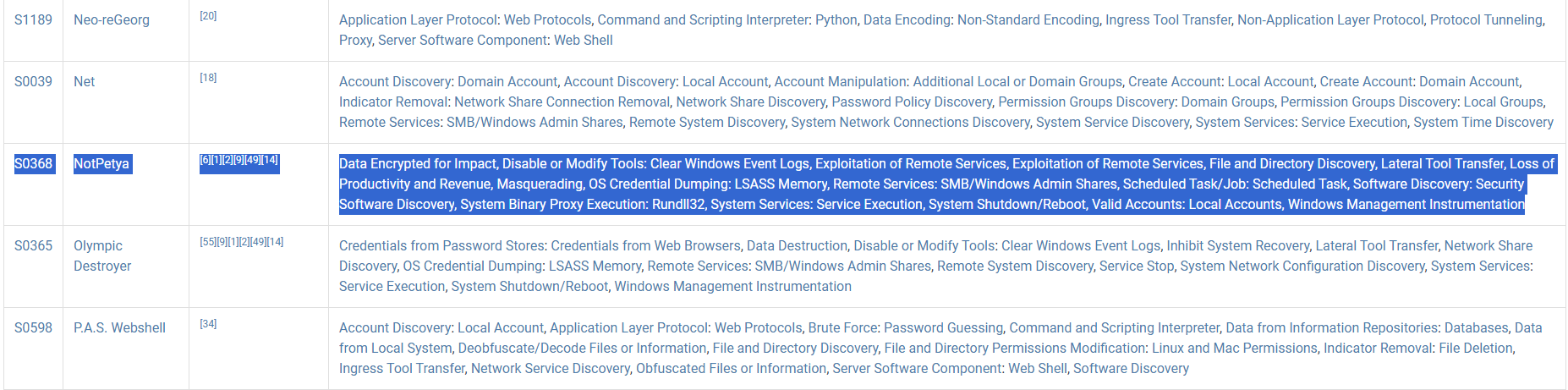
Answer:
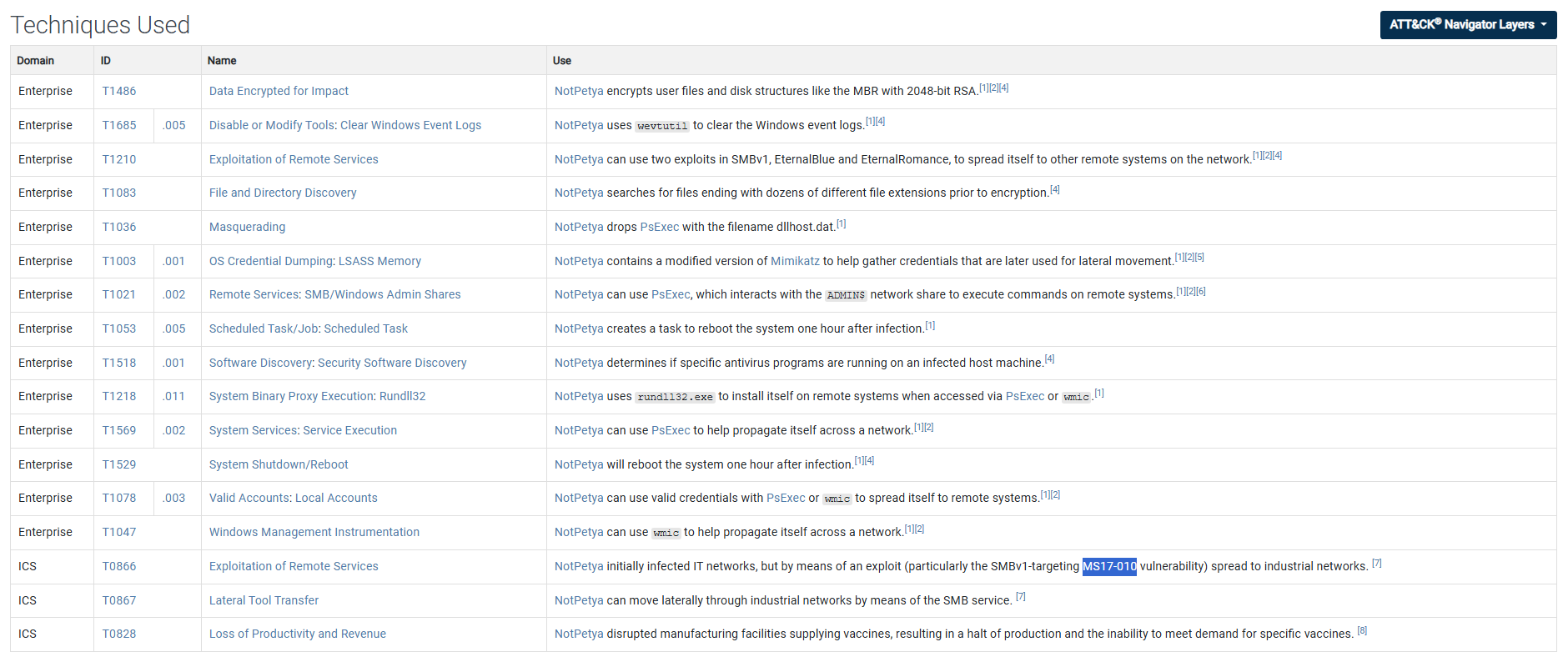
NotPetyaTask 11: What Microsoft security bulletin was associated with NotPetya's spread?
I opened the MITRE ATT&CK page for NotPetya and reviewed the documented techniques and exploitation behavior.
Answer:
MS17-010Task 12: What malware did Sandworm use to target modems?
I searched the Sandworm page for references to modems. A cited source referenced AcidRain as the malware involved.
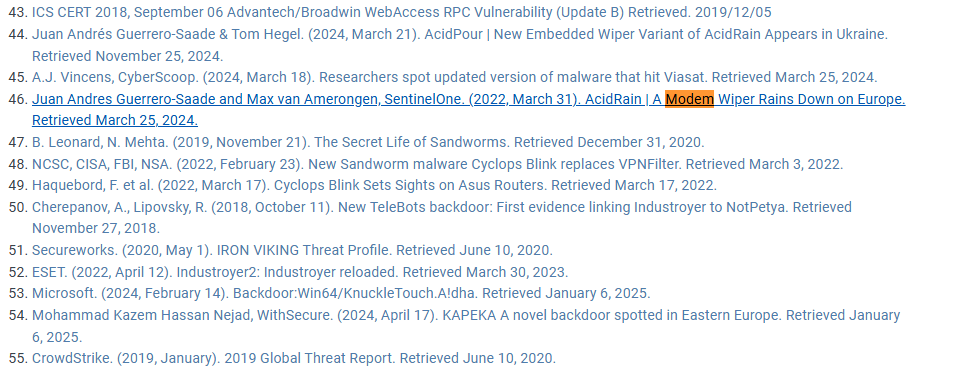
I then opened the MITRE ATT&CK page for AcidRain to verify the association.

Answer:
AcidRainTask 13: Which non-standard port was used for an SSH server?
I searched the Sandworm page for SSH and located the Non-Standard Port technique description. The entry documented the listening port used by the group.

Answer:
6789Task 14: Which APT group collaborated with Sandworm?
I reviewed the Sandworm group summary and related-group information. The page identified the collaborating group by its APT designation.

Answer:
APT28Investigation Summary
This Sherlock focused on using MITRE ATT&CK as a threat-intelligence research tool rather than simply looking up isolated answers. The investigation moved between group, campaign, software, and technique pages to connect Sandworm activity to specific adversary behaviors.
| Category | Finding |
|---|---|
| Threat Actor | Sandworm Team / BlackEnergy Group / APT44 |
| Operations Began | 2009 |
| 2016 Campaign | Ukraine Electric Power Attack (C0025) |
| Credential Access | Brute Force (T1110) and LSASS Memory (T1003.001) |
| 2016 Script | ufn.vbs |
| 2022 Persistence | Web Shell (T1505.003) |
| Web Shell | Neo-REGEORG |
| SCADA Binary | scilc.exe |
| Destructive Malware | CaddyWiper |
| CaddyWiper Execution | Native API (T1106) |
| Worm-Like Malware | NotPetya |
| NotPetya Exploit Bulletin | MS17-010 |
| Modem-Targeting Malware | AcidRain |
| Non-Standard SSH Port | 6789 |
| Collaborating Group | APT28 |
Key Takeaway
The main value of the lab was learning how to pivot through MITRE ATT&CK relationships. A single threat actor page can lead to campaigns, techniques, software, procedure examples, and cited reporting. ATT&CK Navigator then makes it easier to narrow a large campaign to the tactics relevant to a specific question.